

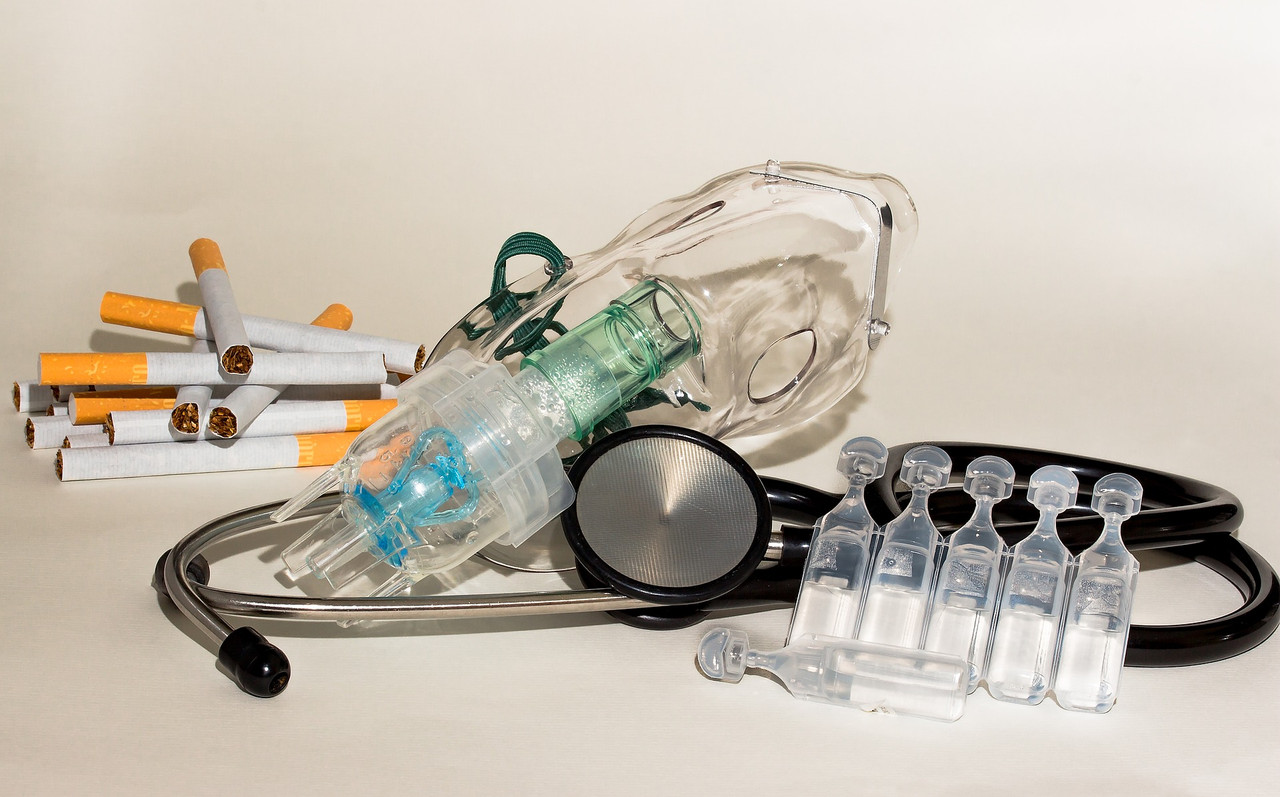
Smokers with exhaled carbon monoxide levels above 13 ppm have a more than 20-fold increased risk of death or poor prognosis after a heart attack, indicative of heavy smoking and smoke inhalation. This is the result of the current research results presented at ESC Congress 2022.
"The amount of carbon monoxide in your breath is directly related not only to how many cigarettes you smoke, but also to how you smoke," said Professor Patrick Henry, a research leader at the hospital Lariboisiere in Paris, France. says. “People may inhale the smoke heavily or not at all, either smoking it from start to finish or leaving the ashtray lit. Finally, where you smoke is also important. It does play a role: smoking in confined, unventilated spaces can raise carbon monoxide levels compared to smoking outdoors.”
Burning tobacco produces carbon monoxide. It is a highly toxic gas that can also be found in automobile exhaust, pollutants, and broken stoves. Carbon monoxide replaces oxygen in the blood and can be fatal. "Patients who have had an acute heart attack, such as a heart attack, don't have enough oxygen in their coronary arteries," Professor Henry said. I hypothesized that there was."
For all consecutive adults hospitalized for acute heart disease in 39 intensive care units (ICCUs) in France during his 2 weeks in April 2021, he reported exhaled monoxide within 2 hours of admission. carbon was measured. A total of 1,379 patients were tested. The average age he was 63 years old and 70% were male. The reasons for admission were 720 (52%) with acute coronary syndrome, 186 (13%) with acute heart failure, and 473 (34%) with other acute heart disease. The median length of ICU stay was 5 days.
Patients were asked about their smoking status. His one-third (33%) of the participants were nonsmokers, 39% were former smokers, and 27% were current smokers. Carbon monoxide levels were similar in never-smokers and ex-smokers (mean 3.6 ppm, 3.3 ppm, p=0.12) and significantly higher in smokers (mean 9.9 ppm, p<0.001). The researchers analyzed the association between carbon monoxide levels and the primary outcome of in-hospital serious adverse events consisting of death, resuscitative cardiac arrest, or cardiogenic shock. A total of 58 (4.2%) patients experienced in-hospital serious adverse events.
#inhalation #science #bodysystem
Heavy smoking and smoke inhalation may worsen impact of heart attacks
![Heavy smoking and smoke inhalation may worsen impact of heart attacks]() Reviewed by Admin
on
July 15, 2022
Rating:
Reviewed by Admin
on
July 15, 2022
Rating:

No comments: